10 Easy Indoor Gardening Ideas for a Greener Home
Discover easy indoor gardening ideas to grow herbs, vegetables, and beautiful plants at home—even with limited space.
10 Easy Indoor Gardening Ideas for Beginners
Indoor gardening is an easy and rewarding way to bring nature into your home. Whether you live in a small apartment or simply want fresh herbs within reach, you can create a beautiful indoor garden with very little space and equipment.
You don't need a large backyard to enjoy gardening. With the right plants, suitable containers, good lighting, and a simple care routine, almost anyone can grow healthy plants indoors.
In this guide, you'll discover 10 easy indoor gardening ideas for beginners, along with practical tips to help your plants grow successfully.
1. Choose the Right Location
The first step in successful indoor gardening is choosing the right location. Most plants need access to natural light, so start by looking for a bright area near a window.
South-facing windows usually provide strong light, while east- and west-facing windows can also work well for many indoor plants.
- Choose a bright area with natural light.
- Avoid placing plants directly next to cold drafts.
- Keep plants away from strong heating or air-conditioning vents.
- Leave enough space for plants to grow.
2. Start With Easy Indoor Plants
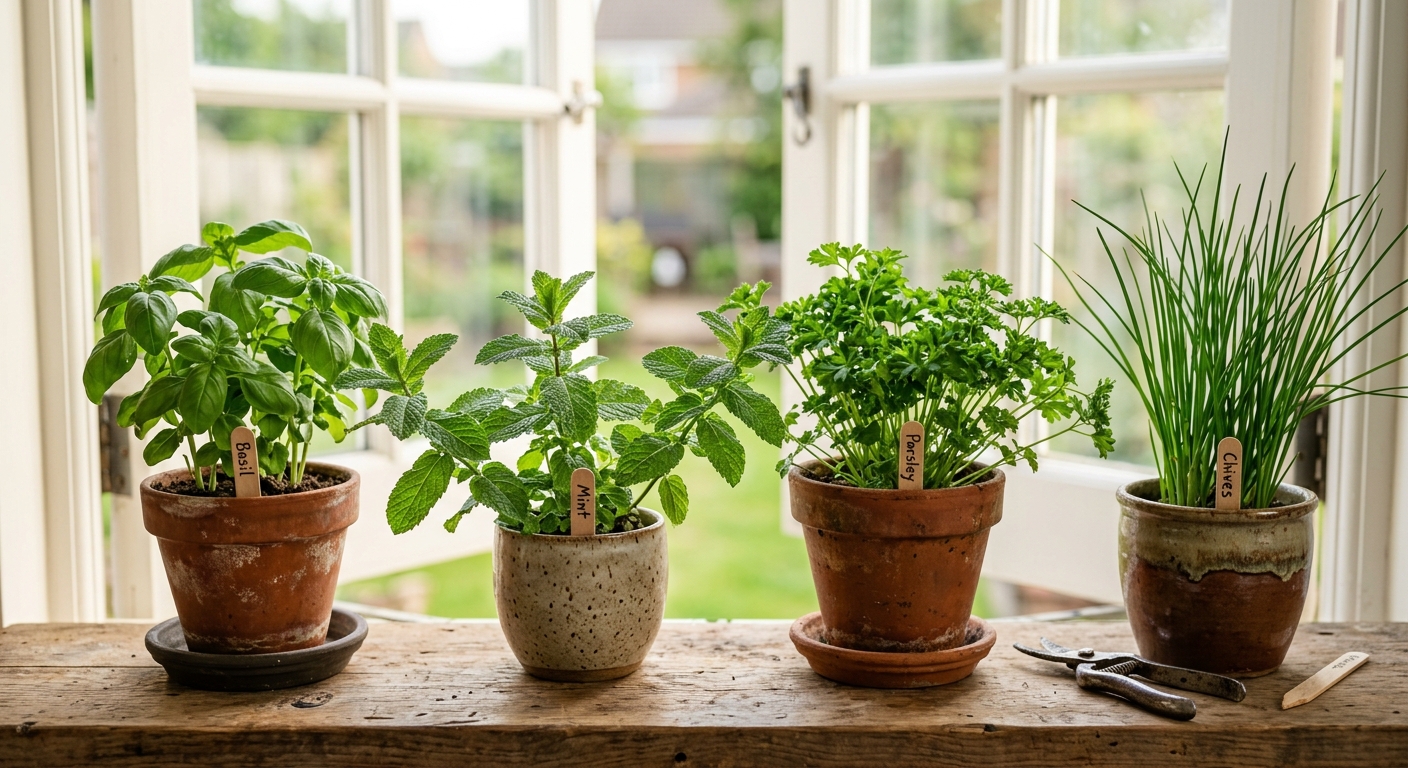
If you're new to indoor gardening, don't start with plants that require complicated care. Choose varieties that are naturally adaptable and forgiving.
Great Plants for Beginners
- Basil
- Mint
- Parsley
- Chives
- Snake plant
- Pothos
- Spider plant
- Aloe vera
Herbs are especially useful because you can grow them in your kitchen and harvest fresh leaves whenever you need them.
3. Create a Small Kitchen Herb Garden
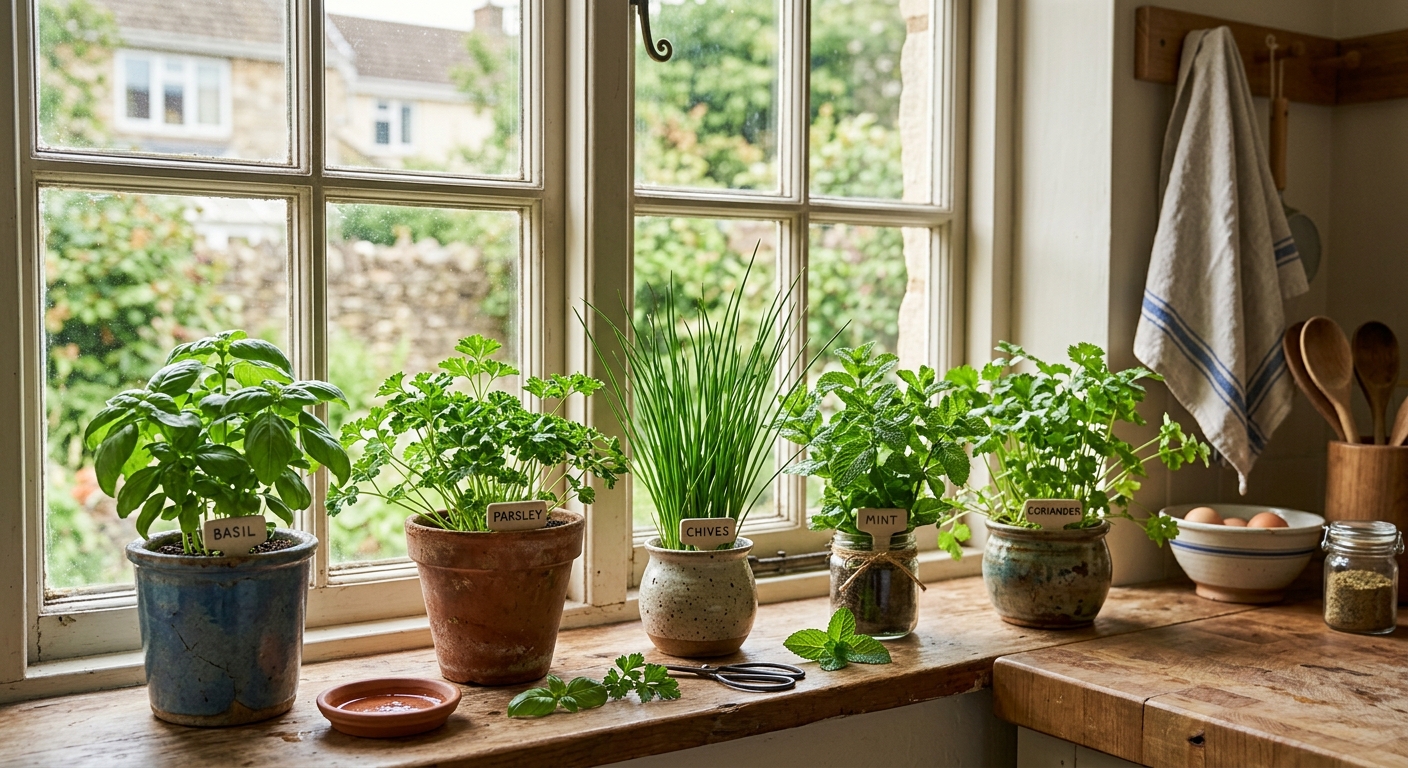
Your kitchen can be one of the best places to start an indoor garden. Fresh herbs don't require much space and can provide both beauty and practical value.
Place small pots of basil, mint, parsley, rosemary, or chives near a bright kitchen window. Use separate containers if different herbs have different watering requirements.
Gardening Tip
Harvest herbs regularly by trimming the outer leaves first. Regular harvesting can encourage many herbs to produce new growth.
4. Use Containers With Good Drainage
One of the most common indoor gardening mistakes is using containers without proper drainage. Excess water can remain around the roots and increase the risk of root problems.
Choose pots with drainage holes at the bottom. Place a tray underneath each container to protect your furniture and floors from excess water.
- Always check for drainage holes.
- Use a suitable indoor potting mix.
- Avoid containers that are too large for small plants.
- Empty standing water from trays when necessary.
5. Don't Overwater Your Plants
More water does not always mean healthier plants. Overwatering is one of the most common reasons indoor plants struggle.
Before watering, check the soil with your finger. If the top layer feels dry, your plant may need water. If the soil is still wet, wait before watering again.
Simple Rule
Water according to the plant's needs rather than following a fixed daily schedule. Different plants, containers, temperatures, and seasons require different amounts of water.
6. Grow Microgreens Indoors
Microgreens are another excellent option for indoor gardening. They grow quickly and can provide fresh greens without requiring a large growing area.
You can grow microgreens in shallow trays using seeds such as radish, broccoli, sunflower, peas, or mustard. With suitable light and moisture, many varieties can be ready to harvest in just a few weeks.
- Use a shallow growing tray.
- Choose quality seeds intended for growing.
- Keep the growing medium evenly moist.
- Provide sufficient light.
- Harvest when the greens are young and healthy.
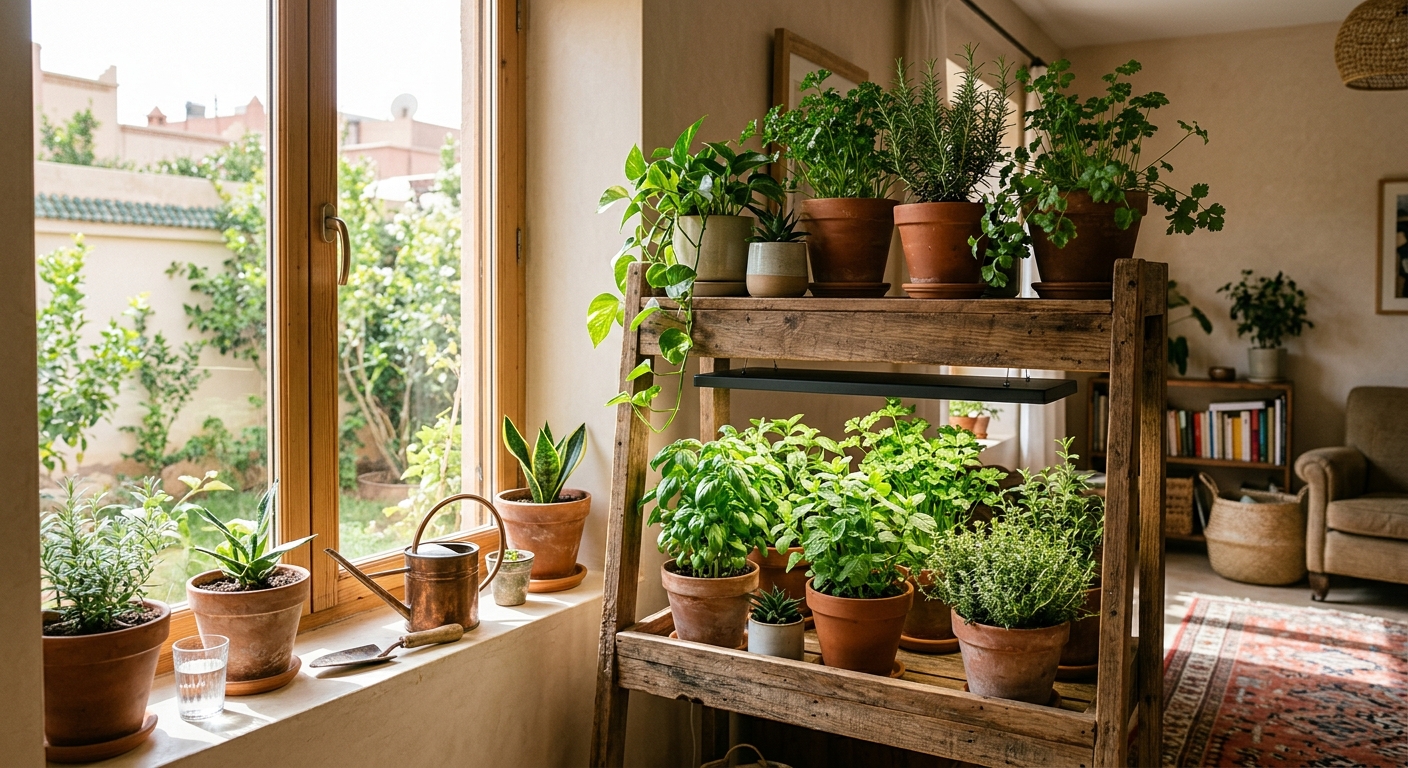
7. Add a Grow Light When Necessary
Not every home receives enough natural sunlight for healthy plant growth. If your plants are becoming weak, pale, or unusually stretched, insufficient light may be the reason.
A quality LED grow light can provide additional light when natural sunlight is limited. Position the light according to the manufacturer's recommended distance and schedule.
Signs Your Plant May Need More Light
- Long, weak stems.
- Small or pale new leaves.
- Slow growth.
- Plants leaning strongly toward a window.
8. Make the Most of Small Spaces
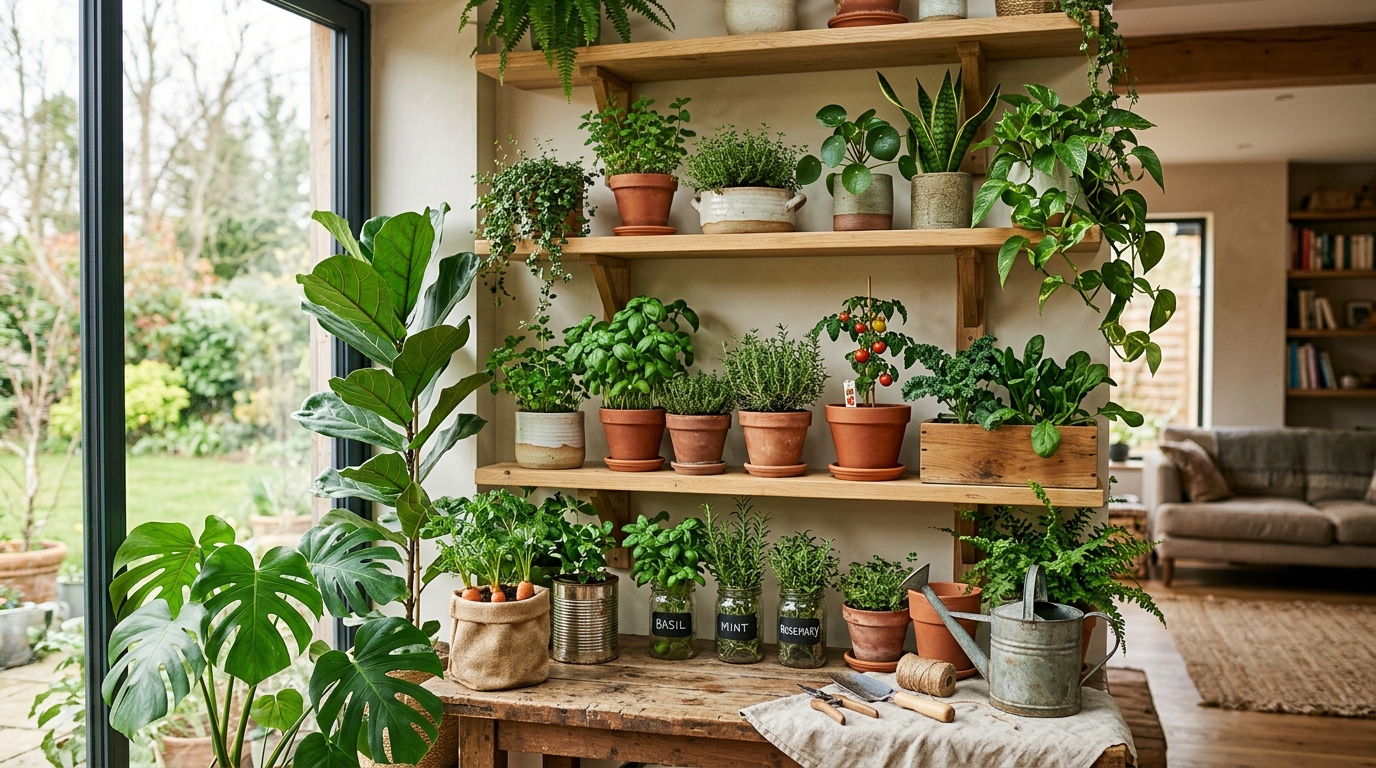
You don't need a large room to enjoy indoor gardening. Vertical shelves, hanging planters, windowsills, and compact plant stands can help you make better use of limited space.
A vertical arrangement can also turn an empty wall or corner into a beautiful green feature.
- Use narrow shelves near bright windows.
- Try hanging planters where appropriate.
- Use windowsills for compact herbs.
- Group plants together to create a green corner.
9. Create a Simple Plant Care Routine
Consistency is more important than complicated gardening techniques. A simple weekly routine can help you notice problems before they become serious.
Weekly Indoor Garden Checklist
- Check the moisture level of the soil.
- Inspect leaves for pests or unusual spots.
- Remove dead or damaged leaves.
- Rotate plants if they are growing toward one direction of light.
- Clean dusty leaves when necessary.
- Check that drainage holes are not blocked.
10. Make Your Indoor Garden More Sustainable
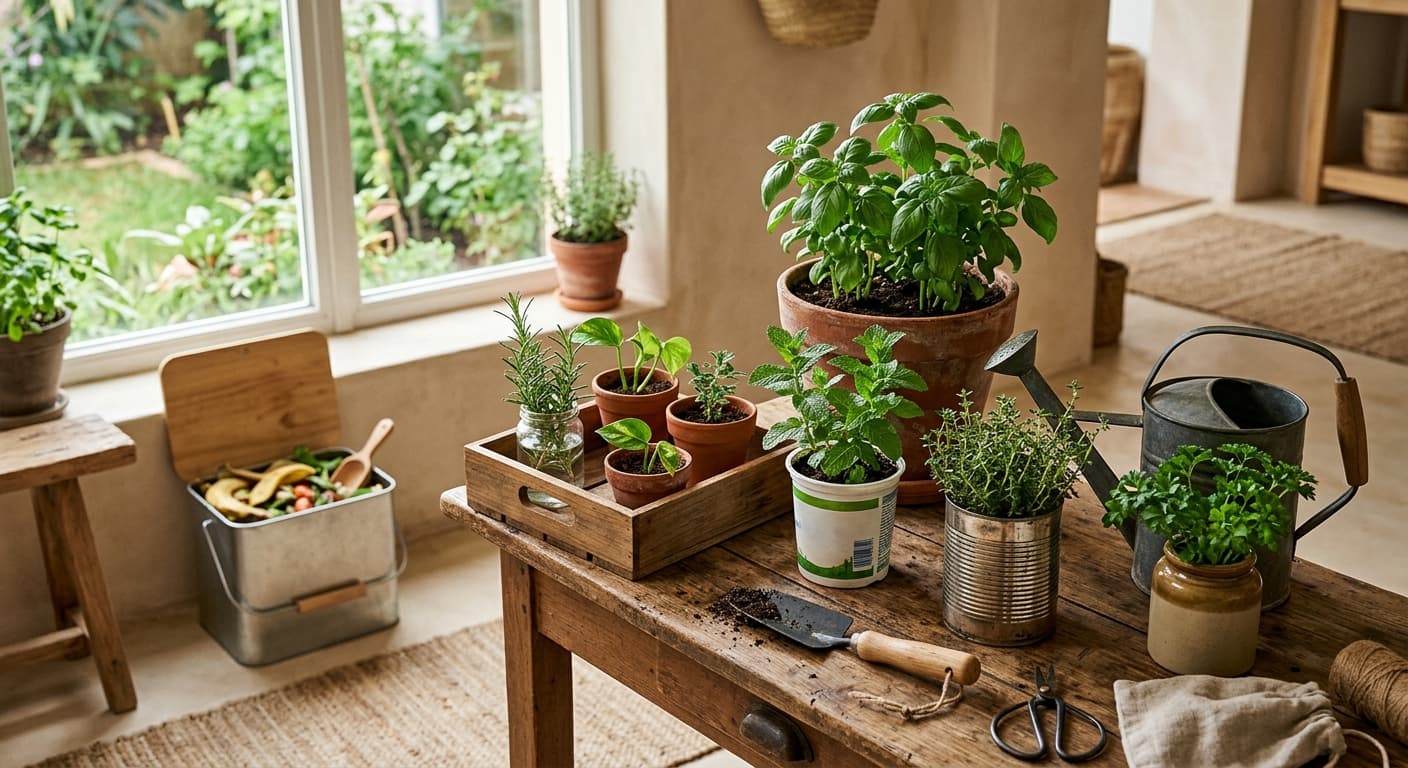
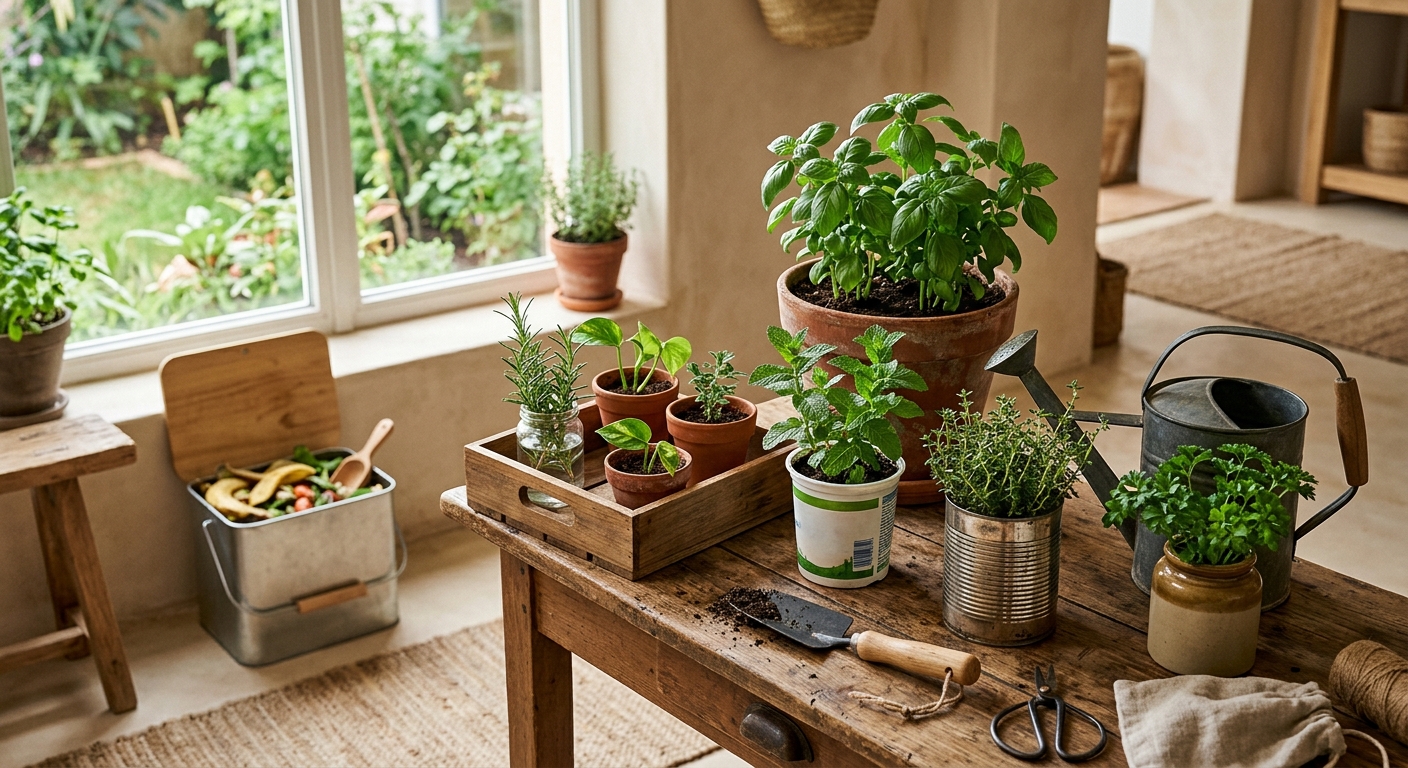
Indoor gardening can also support a more sustainable lifestyle. Instead of buying new containers for every plant, look for safe household items that can be reused as planters.
You can also propagate suitable plants from cuttings, grow herbs that you regularly use in cooking, and choose durable containers that can be reused for years.
- Reuse suitable containers as planters.
- Grow herbs you regularly eat.
- Propagate plants when possible.
- Use durable pots instead of disposable containers.
- Choose environmentally responsible growing media when suitable.
Common Indoor Gardening Mistakes to Avoid
Even easy plants can struggle when their basic needs are ignored. Avoiding a few common mistakes can make indoor gardening much easier.
- Overwatering: Let the soil dry appropriately between waterings.
- Poor lighting: Make sure each plant receives enough light.
- No drainage: Use containers with drainage holes.
- Wrong plant location: Keep plants away from extreme temperatures.
- Ignoring pests: Inspect leaves regularly.
- Too many plants: Start small and expand gradually.
Easy Indoor Gardening Starter Checklist
What You Need to Get Started
- Healthy beginner-friendly plants or seeds.
- Containers with drainage holes.
- Quality indoor potting mix.
- A watering can or small container.
- A bright growing location.
- A grow light if natural light is insufficient.
- A simple weekly plant-care routine.
Final Thoughts
Indoor gardening doesn't have to be complicated. Start with a few easy plants, give them the right amount of light and water, and pay attention to how they grow.
Whether you want fresh kitchen herbs, colorful houseplants, or a small indoor vegetable garden, there are plenty of ways to create a greener home.
The best approach is to start small, learn from your plants, and grow your indoor garden gradually.
Get Greener Ideas
Join our newsletter for weekly eco-living tips, gardening guides, and DIY projects.